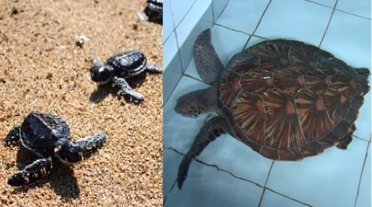
Sea turtles are ancient species that have existed for approximately 150 million years and continue to survive today. They play a crucial role in maintaining the balance of marine and coastal ecosystems. Indonesia is home to six of the world’s seven sea turtle species: green turtle (Chelonia mydas), hawksbill turtle (Eretmochelys imbricata), olive ridley turtle (Lepidochelys olivacea), leatherback turtle (Dermochelys coriacea), flatback turtle (Natator depressus), and loggerhead turtle (Caretta caretta). The Kemp’s ridley turtle (Lepidochelys kempii) is not found in Indonesia and inhabits mainly the Atlantic Ocean and Mexican waters.
Sea turtles begin reproducing at around 30 years of age and lay approximately 60–130 eggs per nesting season, returning to nest only every 2–5 years. Survival rates to adulthood are extremely low, estimated at only 1–2%. One of the major threats to sea turtles is egg consumption by local communities, often due to misconceptions about nutritional and health benefits. Research indicates that turtle eggs contain Persistent Organic Pollutants (POPs) and high levels of polychlorinated biphenyls (PCB), sometimes up to 300 times above WHO safety limits, which can lead to serious health risks including cancer, liver damage, hormonal disruption, and birth defects.
Baliedu offers an educational tourism program aimed at raising awareness about sea turtle conservation and mangrove ecosystem protection. Through interactive and participatory activities, participants gain a deeper understanding of the ecological importance of sea turtles and the need to preserve their natural habitats.
Includes
Not Includes
Reservations will only be confirmed after we receive payment via bank transfer to the following account:
Starting from
Per person
Duration
1 days
Group Size
2–25 guests
Booking
No gallery available.
No review available.
 Volunteer
Conservation
similarity: 0.113
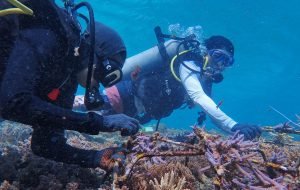
The North Bali Marine Conservation Volunteer Adventure is a one-week marine conservation and community volunteer program in North Bali that combines coral restoration, community engagement, and cultural exploration. Participants actively engage in coral gardening alongside marine experts. Each morning, they assemble and plant coral structures to restore damaged reef ecosystems. The program provides in-depth knowledge about marine ecology, sustainability, and climate change impacts on coral reefs. In the afternoons, participants snorkel or dive across multiple reef sites to witness the marine biodiversity they are helping to protect. Beyond conservation, volunteers engage with local communities by teaching languages or leading creative workshops at village schools. The program also includes cultural immersion experiences such as cooking traditional Balinese dishes, learning crafts, and trekking through rice terraces and waterfalls. Daily reflection sessions promote leadership, teamwork, and environmental awareness. This is more than a holiday—it is a meaningful journey that benefits both the ocean and local communities.
Starting from
Rp10.500.000

 EN
EN
 ID
ID